Thinking about adding an ADU to your Magnolia Heights property but not sure which layout will actually fit your lot and lifestyle? You are not alone. Many St. Petersburg owners want extra space or rental income, yet the right path depends on your lot, access, and local rules. In this guide, you will compare three smart ADU layouts that work on Magnolia Heights lots and learn how to align design, privacy, parking, and flood requirements so your project stays on track. Let’s dive in.
Start with your lot and code
Magnolia Heights is a mature St. Petersburg neighborhood with a consistent rhythm of porches, modest single-family homes, and driveways. Lots tend to be narrow, and alley access is not universal, which affects where you can place an ADU and how you handle parking and entries. Before sketching layouts, confirm the basics for your specific parcel.
- Zoning and ADU allowance. Check whether ADUs are permitted on your lot and if there are size caps. Start with the City of St. Petersburg Planning & Development and the Land Development Code.
- Setbacks and height. Detached cottages and garage-top units often follow different rear and side setbacks and height limits than the main house. Verify before you design.
- Lot coverage and stormwater. Magnolia Heights’ urban lots can hit lot coverage or impervious limits quickly. Plan for pervious paving and drainage.
- Parking rules. Determine if an extra on-site space is required and if tandem parking in your driveway is acceptable.
- Flood elevation. Identify your FEMA flood zone, Base Flood Elevation, and any required freeboard. These drive foundation type and entry stairs or ramps.
- Utilities and metering. Ask how water, sewer, and electric connections work and whether a separate meter is allowed or required.
- Permits and timeline. Budget time for building, electrical, plumbing, and mechanical permits. If you plan to rent, ask about any licensing or short-term rental restrictions.
- Historic or design review. Confirm any neighborhood design guidelines that could affect materials, porches, or rooflines.
For parcel specifics, consult the City of St. Petersburg Planning & Development, the City Building Department, the Pinellas County Property Appraiser, and the FEMA Flood Map Service Center.
Three ADU layouts that fit Magnolia Heights
Detached cottage
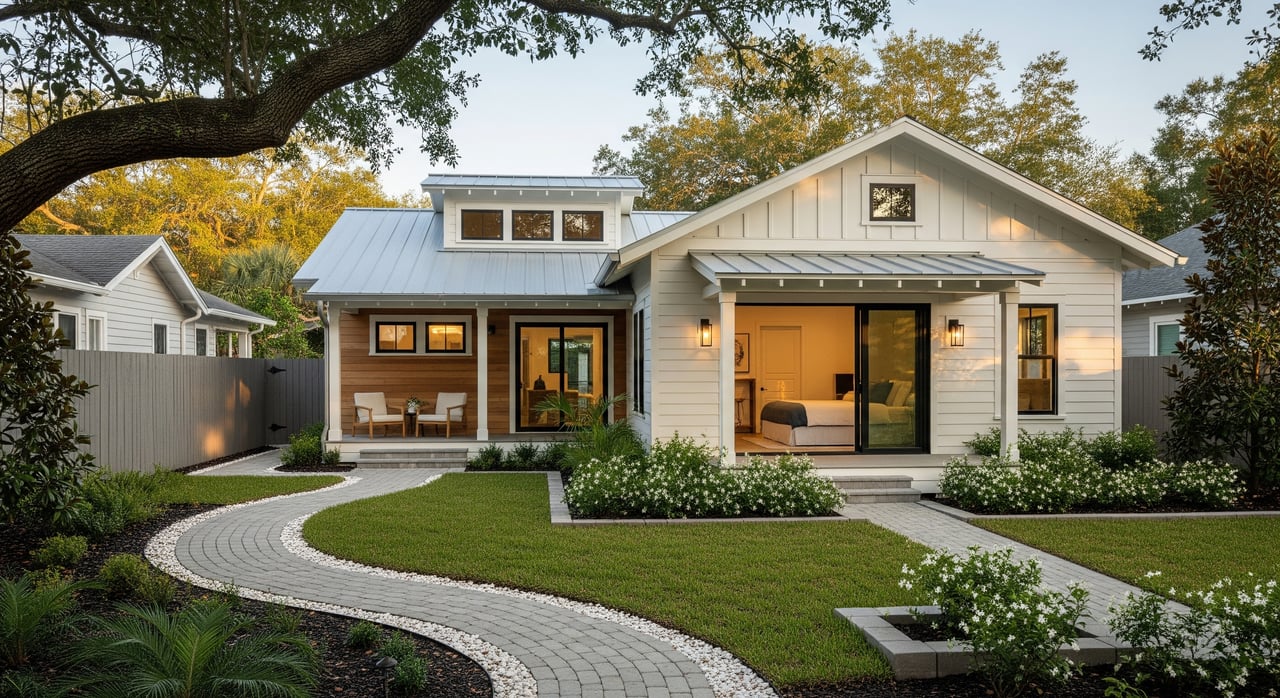
A detached cottage in the rear or side yard is a flexible choice for long-term rental, guests, or multigenerational living. Typical footprints range from about 400 to 900 square feet, with efficient modules like 20x24 or 24x30 that respect setbacks and lot coverage.
- Best-fit lots: Parcels with a usable rear yard or alley access. If you do not have an alley, plan a side garden entry and careful driveway circulation.
- Entries and privacy: A small porch and a side or garden-facing door keep the streetscape hierarchy intact while giving the unit its own identity. Use window orientation, clerestory windows, and landscaping to preserve privacy for you and your neighbors.
- Systems and servicing: Tie into existing water and sewer, and plan for the HVAC condenser, water heater, and dryer venting. An electrical subpanel or a separate meter may be possible depending on code.
- Materials and form: Keep forms sympathetic to Magnolia Heights’ character with simple gables, lap siding, and scaled porches. Choose durable, coastal-ready finishes like fiber cement siding and coated metal flashings.
- Pros: Strong privacy, flexible use, and easier to scale to the lot and streetscape.
- Tradeoffs: Added site work and utility runs, plus enough rear yard depth is required.
Garage-top studio
A studio above a garage preserves yard space while adding rentable square footage. The garage below typically ranges from 20x20 to 24x24, with a 400 to 600 square foot studio above. The combined height must meet local limits.
- Best-fit lots: Properties with an existing driveway or where you want to add covered parking. If the garage faces the street, use landscaping and scale to soften the street view.
- Entries and privacy: Keep a separate exterior stair with a code-compliant landing. Locating the stair toward the rear improves privacy and keeps the primary facade calm.
- Systems and servicing: Route plumbing and electrical efficiently, and provide fire separation and sound control between the garage and living space as required by code.
- Materials and form: Reduce perceived mass with dormers, stepped rooflines, and compatible garage doors. Keep roof shapes simple to work with wind design.
- Pros: Efficient footprint, preserved yard, and new on-site parking.
- Tradeoffs: Structural and fire-separation complexity, stairs that reduce usable area, and potentially higher cost per square foot.
Internal suite
An internal suite converts existing space or adds a modest attached addition. Think a ground-floor in-law suite, a studio carved from an existing plan, or a small rear addition. Sizes vary widely, from 300 to 500 square feet for compact studios to 800 square feet or more for larger suites.
- Best-fit lots: Homes with usable interior space or room for a small rear or side addition. Existing footprints can simplify setbacks and massing.
- Entries and privacy: A separate side or rear entry supports rental use, while internal doors maintain egress to the main house. Add locks, separate HVAC, and acoustic separation for comfort.
- Systems and servicing: Sharing utilities can be simpler and more cost-effective. Ground-floor internal suites are ideal for accessible design.
- Materials and form: Minimal change to the streetscape since most alterations are internal or at the rear.
- Pros: Often the most cost-effective and fastest to permit and build.
- Tradeoffs: Less privacy and sometimes lower rent potential than a fully detached unit.
Flood, wind, and hurricane design
Coastal St. Petersburg conditions should shape your ADU from day one. If your lot is in a FEMA flood zone, your finished floor may need to sit above the Base Flood Elevation plus any local freeboard. That affects stairs, ramps, and entries.
- Foundations: Options include raised slab, elevated slab, piers or piles, and stem walls. Each has cost and height implications. Small detached cottages on piers often offer a cost-efficient path to meet flood requirements.
- Structure and envelope: Plan for hurricane-resistant features such as impact-rated glazing or shutters, reinforced connections, and roof tie-downs. Keep roof shapes simple and size eaves for wind uplift.
- Utilities: Elevate mechanicals and electrical equipment on pads or protect them per code. Keep exterior equipment away from neighbor windows and property lines.
- Materials: Choose corrosion-resistant, low-maintenance materials like fiber cement siding and stainless or galvanized fasteners.
Parking, entries, and privacy tips
Magnolia Heights values a human-scaled streetscape. Design circulation and entries to feel natural and neighborly.
- Keep the main house entry primary, especially if the ADU faces the street.
- Use side or garden entries with small porches or covered landings for detached cottages.
- If an extra space is required, consider tandem driveway parking, a compact garage below a studio, or on-site parallel parking. Check curb cut and impervious surface rules.
- Layer privacy with window placement, high sills, frosted glass, fences, and landscape buffers.
- Provide well-lit, direct paths from parking to the ADU entry.
Costs, timeline, and ROI basics
Costs vary widely with site work, elevation needs, and finishes. As a rule of thumb, internal suites are generally the lowest cost per square foot. Detached cottages are mid-range, and garage-top studios often run higher due to two-story structure, stairs, and fire separation.
- Get 2–3 estimates from local contractors experienced with coastal ADUs. Ask about elevation strategies, hurricane requirements, and utility runs.
- Plan for 4 to 12 months from design through construction, depending on complexity and permits. Add time if you need variances.
- Model rental returns conservatively. Rents depend on unit size, finishes, and proximity to downtown St. Petersburg. Include vacancy, insurance, taxes, and management.
- If you are considering short-term rentals, confirm local regulations before you invest.
Example footprints that work here
- Detached cottage, “Compact 1BR” at about 480 square feet (20x24): 1 bedroom, open living and kitchen, 1 bath, mechanical closet, and a small covered porch. Works well at the rear with a side path and AC on the non-street side.
- Garage-top studio, “Tandem garage + studio” with a 20x20 garage and a 400 to 600 square foot studio above: studio layout with kitchenette, full bath, and small balcony. Place the stair to the rear for privacy and confirm height limits and fire separation.
- Internal suite, “Main-floor in-law conversion” at roughly 600 to 800 square feet: 1 bedroom, accessible bath, living/dining, kitchenette or full kitchen, and a private rear entry porch or ramp. Often the best choice for accessibility and cost control.
Your step-by-step checklist
- Confirm zoning and permitted ADU forms with City planning.
- Order a current survey and note easements and setbacks.
- Check FEMA flood zone, Base Flood Elevation, and local freeboard.
- Verify sewer and water connection points and metering options.
- Ask about parking requirements and whether tandem or on-site parking works.
- Determine if any design or historic review applies to your property.
- Collect sample plans that match Magnolia Heights scale and materials.
- Get 2–3 local contractor estimates, including elevation and hurricane features.
- Evaluate rental demand and conservative rent targets for your unit size and finishes.
- Plan for insurance costs and short-term rental restrictions if relevant.
- Map a neighbor outreach plan if you anticipate variances or exceptions.
Choosing the right ADU layout in Magnolia Heights comes down to a site-first approach. Confirm zoning, setbacks, flood elevation, and access, then match the layout to your lot. A detached cottage suits privacy and flexibility, a garage-top studio adds parking and preserves yard space, and an internal suite offers a cost-effective, accessible option. If you want a Magnolia Heights plan that fits your property, your budget, and your goals, let’s talk.
Ready to evaluate your lot and compare ADU layouts with a local plan? Schedule a free consultation with Unknown Company to map out your best path.
FAQs
Can I add a separate utility meter for an ADU in St. Petersburg?
- Rules vary by jurisdiction and utility. Some allow a separate meter, while others require approvals or a shared service. Confirm with City of St. Petersburg utilities and local code.
Will I need a variance to build an ADU on my Magnolia Heights lot?
- Possibly. If your design exceeds limits for height, setbacks, or lot coverage, you may need a variance with added review time and neighbor notice.
How does being in a FEMA flood zone affect my ADU design?
- Your finished floor may need to be above Base Flood Elevation plus freeboard. That choice drives foundation type, stairs or ramps, and cost. Get local contractor estimates.
Which ADU type typically rents best in Magnolia Heights?
- It depends on size, finishes, and privacy. Detached cottages and garage-top studios often command higher rents. Internal suites appeal to long-term tenants seeking affordability.
Are two-story garage-top ADUs allowed in Magnolia Heights?
- They can be, but they must meet height and zoning limits for accessory structures. Confirm applicable rules with the city before you finalize plans.